
For many years, the arborist community has been touting the great benefits trees offer to the urban environment. I think everybody in the world agrees with this from the surface level. One of the deeper discussions on this topic is the value of stormwater-runoff mitigation that trees can provide. However, nearly every time I’ve tried to bring up this topic in a planning setting, people look at me like I’m crazy. Yesterday I had an interesting conversation with an engineer who actually perked up a little about the topic. I learned some important things in a pretty short conversation.
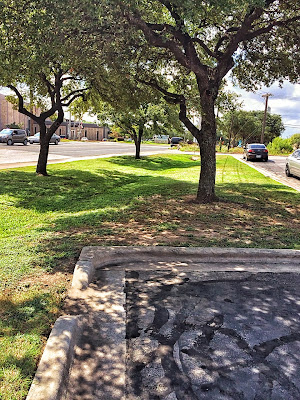
Basically, what we’re talking about here is using the islands in parking lots to collect water and allow it to soak back into the soil. In most parking lots, the green islands scattered about have curbs surrounding them which forces water to go around. Typically, all the runoff water ends up in one big detention pond. The idea of using these islands to collect water seems so simple to me; I couldn’t understand why the technique wasn’t being used. After talking with Greg Ulcek, a civil engineer, some light has been shed.
Every island or tree-well to be used for water collection would require a special study called a hydraulic study as a requirement of the development review process. I’m not getting into the details of a hydraulic study here, those details aren’t the point. The point is that hydraulic studies are expensive. A typical commercial site only has one or two water quality ponds and many parking lot islands. So, we’re talking about increasing from one or two hydraulic studies to 30 studies. That is a deal breaker for any investor/developer building out a property.
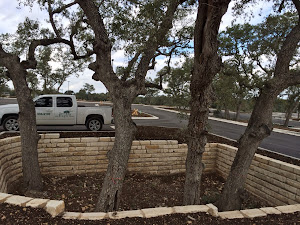
However, there may still be some opportunity to use this sort of technology. Greg offered me two scenarios where it might make sense. One is in very large tree wells. If there is opportunity to hold a significant volume in one single island it could make sense. The other potential opportunity could be on small infill sites where square footage is worth a premium. If islands can help account for the required stormwater mitigation, you would potentially be allowed to build a smaller water quality pond. This would open up more buildable space on the tract of land for buildings or parking spaces.
Another interesting consideration here is that using tree wells to mitigate stormwater would actually be good for the trees. Yeah, trees like water. They need it in fact. Often, the massive changes from site development causes trees to lose water sources they once had. Many times surface water is deliberately routed around the trees. I’ve seen this scenario cause trees to decline and/or die often. Using tree islands to catch water would potentially save many trees. The main trick would be to ensure the tree islands drain properly so the trees don’t die from drowning.
The use of green islands as storm water mitigation ponds seems like a win-win to me. The trees get water they need to survive and developers get more usable land for valuable infrastructure.