Tree Care & Health Management in Austin
Tree Fertilizer Programs
Austin Tree Experts has a unique approach to tree health care management. Rather than waiting for a customer to call us when they notice a problem, we have a regimented program that includes a few timely treatments over the course of a year combined with regular inspections. Property owners often cannot identify early stress signs or remember treatment timing, so we proactively schedule visits and manage the process.
What’s Included
Inspections
Multiple scheduled visits analyze tree condition at different seasonal periods, revealing insights impossible to gather year-round. Inspections are conducted separately from treatments by a dedicated health care manager.
Treatments
The program includes four regular applications: winter bud treatment, spring foliar fertilization, summer stress treatment, and fall deep root feeding (details in Schedule section below).
Insect and Disease Control
Coverage includes necessary pest and disease treatments as needed. Approximately eight percent of customers require additional treatments annually. All-inclusive programming ensures trees receive necessary care without delays. Active customers for a minimum of two years qualify for free oak wilt treatments.
Soil Aeration
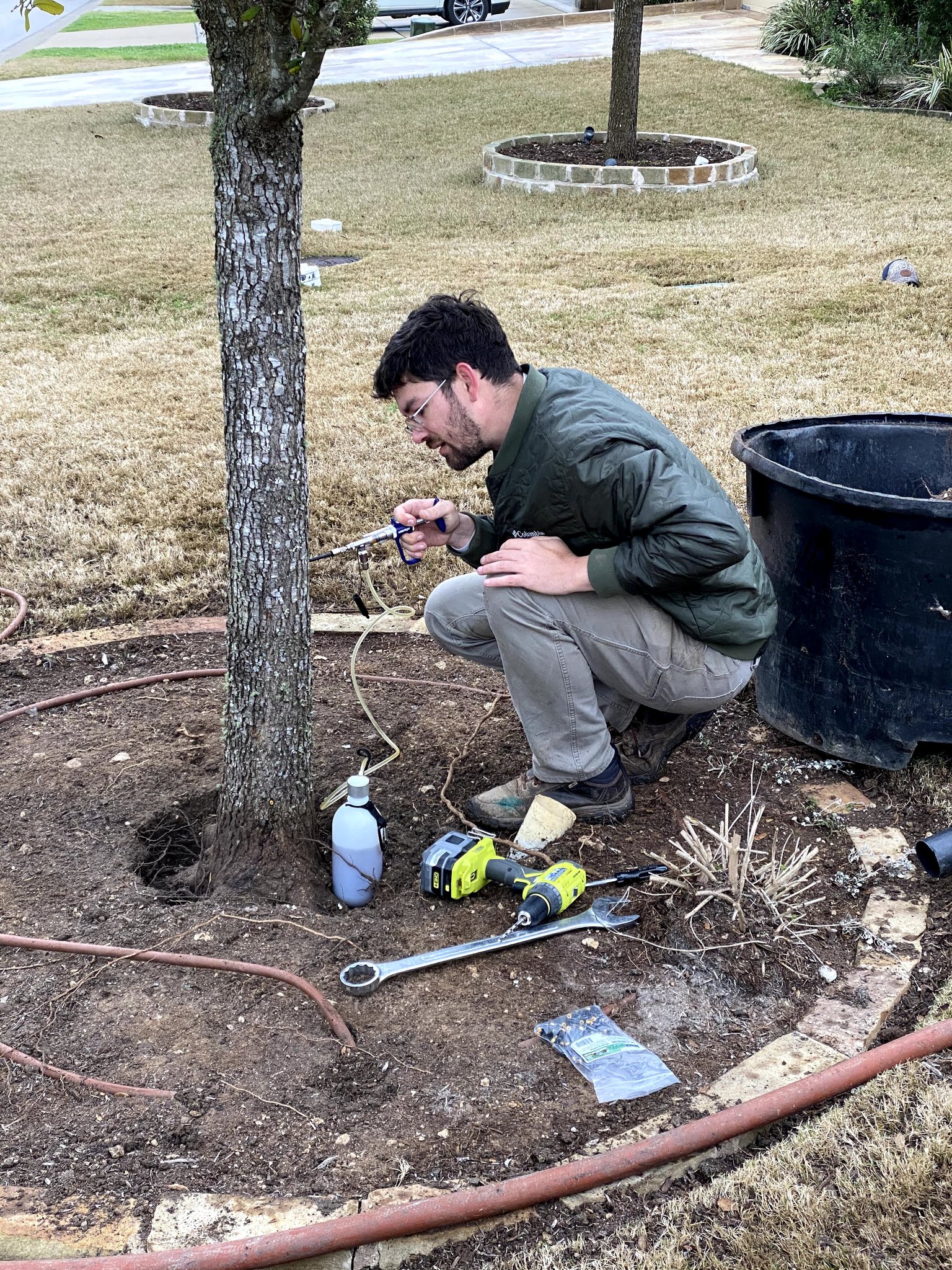
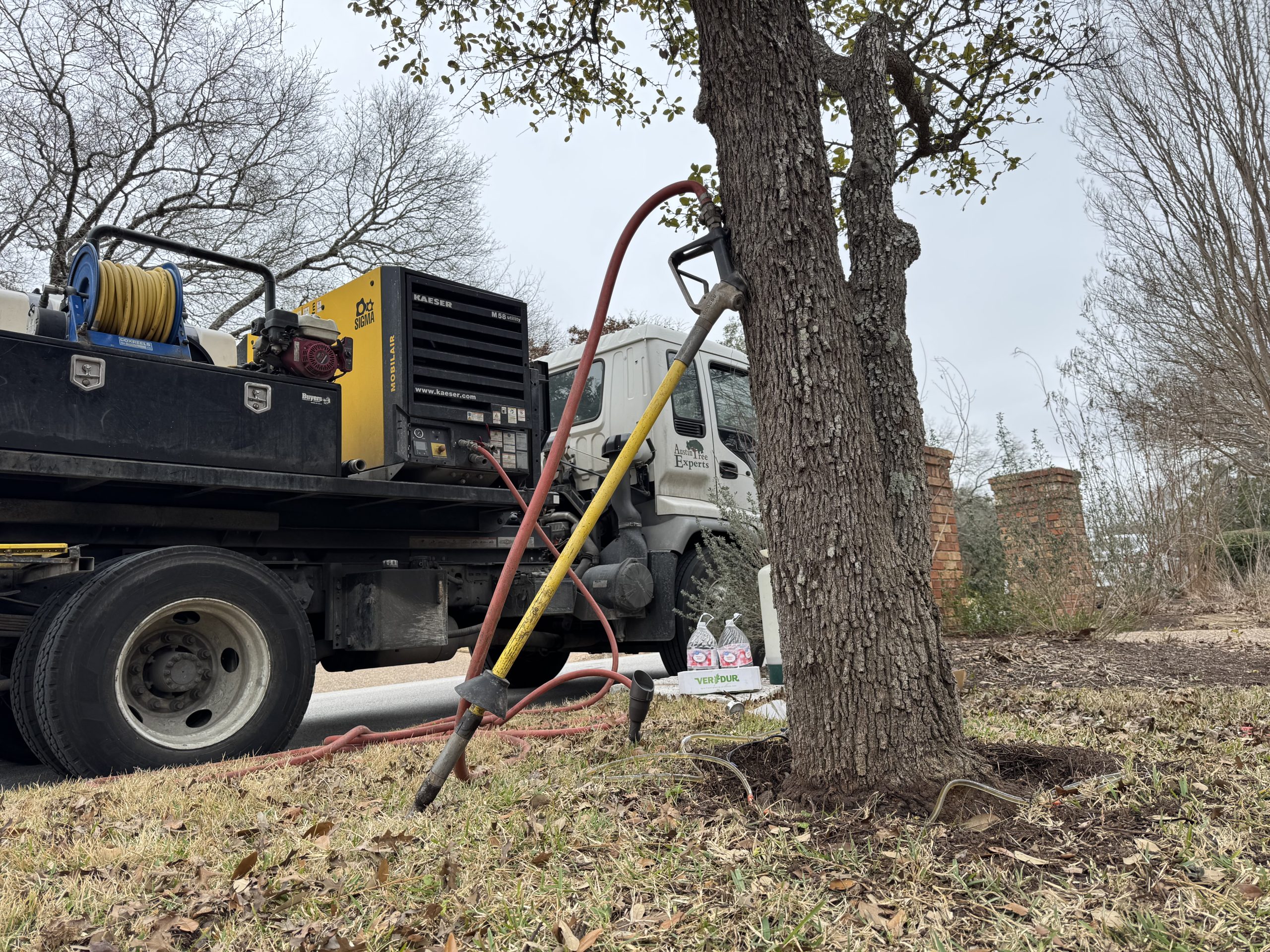
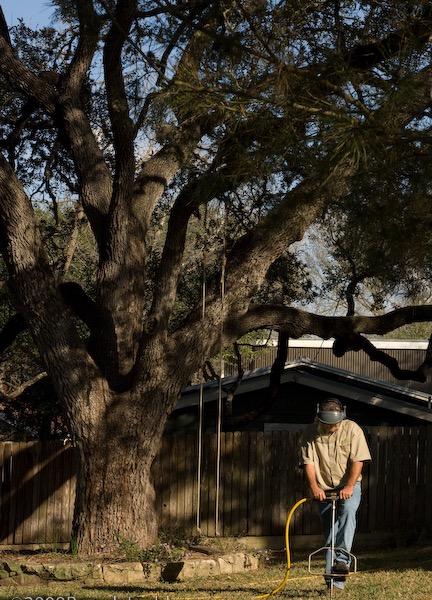
“Deep-root” injection technology inserts needles into soil to pump liquid treatments, creating one-inch diameter holes in grid patterns below tree drip lines, with injection points every 18-24 inches depending on site characteristics.
Not Included
Tree pruning and air-spade work are not included. These services are not needed on a regular, predictable basis. Both services receive separate per-project estimates as needed.
The company views treatment programs as complementary to pruning. Regular care reduces pruning needs by minimizing dead limb appearance. While dead branches naturally emerge every couple years, treatment regimens improve overall tree health and slow this process.
Tree Care Expectations
Customers signing up should understand the company assumes responsibility for tree health. Recovery typically requires 1-3 years minimum to show visible canopy improvements. Insect and disease infestations often strike opportunistically when tree health declines.
Approximately ten percent of the customer base experiences unexpected pest or disease problems annually, which we treat at no additional charge. This approach avoids scenarios where trees die while awaiting customer approval during absences.
Schedule
Pre-Spring Bud Treatment (February 1 – March 10)
Specialized treatment improves bud development for new foliage, with product selection adjusted to individual tree needs.
Spring Foliar Fertilization (March 22 – April 13)
Applied during critical new leaf expansion, this treatment consists of humic acid, micronutrients, vitamins and growth hormones sprayed into the canopy directly onto the foliage.
Summer Stress Treatment (June 7 – August 7)
Hot, dry summers stress trees. Early summer soil treatment applies humic acid and mycorrhizae. The humic acid improves soil structure and water penetration; mycorrhizae fungus grows on root systems and shares absorbed nutrients with the tree.
Fall Deep Root Fertilization (September 22 – December 20)
Applied when sixty to seventy percent of trees’ root growth for the year takes place, this root feeding bolsters fall growth. This represents the only time conventional fertilizer is applied.
Organic Options
Organic alternatives exist, with soil restructuring through air-spade incorporation of organic matter recommended as the best standard program alternative.
Special Note About Standard Programs
We believe our programs are environmentally friendly. Standard turf fertilizer recommendations suggest 1-3 pounds of nitrogen per 1,000 square feet, whereas our program applies approximately 0.25 pounds of nitrogen throughout an average mature tree’s drip line. Through appropriate timing and high-quality products, application rates remain greatly reduced while achieving exceptional results. Pesticide treatments are not standard program components — they are applied only when necessary, with advance customer notification.
Frequently Asked Questions About Tree Care
How do I know if my trees need a care program?
Common signs of tree stress include thinning canopy, smaller-than-normal leaves, early leaf drop, dead branch tips, and discolored foliage. However, many problems develop below the surface before visible symptoms appear. If your trees are mature, have experienced recent construction nearby, or have not received professional attention in several years, a care program can prevent decline before it becomes obvious. Our arborists provide a free assessment to determine whether your trees would benefit from ongoing management.
How much does a tree care program cost?
Annual program pricing depends on the number and size of trees on your property, their current health, and the treatments required. The program is structured as a per-tree annual fee that covers all scheduled treatments, inspections, and any necessary pest or disease interventions. Contact us at (512) 996-9100 for a free on-site evaluation and quote.
How long before I see results?
Tree health recovery is gradual. Expect to see initial improvements — better leaf color, increased canopy density, reduced dieback — within one to two growing seasons. Full recovery from significant stress typically takes two to three years of consistent care. Our dedicated health care manager tracks your trees’ progress at each inspection and adjusts treatments as conditions change.
Is the program safe for my lawn, pets, and family?
Yes. Our application rates are a fraction of what standard lawn fertilizer programs use — roughly one-quarter pound of nitrogen per treatment across a mature tree’s entire drip line. Pesticides are not part of the standard program and are only applied when a specific pest or disease problem requires it. When treatments are necessary, we notify you in advance and follow all label requirements for safety and re-entry intervals.
Can I cancel at any time?
Yes, there is no long-term contract obligation. However, tree health management works best as a sustained program — one season of treatment rarely resolves underlying issues. We recommend committing to at least two full years to see meaningful, lasting improvements. Customers who maintain the program for two or more years qualify for additional benefits, including complimentary oak wilt treatments if needed.
Related Services
- Tree Pruning — regular pruning complements health care by removing dead wood and improving structure
- Oak Wilt Treatment — diagnosis and fungicide treatment, included free for care program customers of two or more years
- Tree Planting — new tree installations include a year of our Healthy Tree Program
- All Services
Get a Free Tree Care Assessment
Our Certified Arborists provide free on-site evaluations to determine whether your trees would benefit from a tree care program. We assess current health, identify stress factors, and recommend a plan tailored to your property.
Call us today: (512) 996-9100