
Oak wilt is a devastating tree disease and very expensive to combat. There has not been any real improvement in the treatment and control options since the first product was released on the market back in the mid 90’s. For chemical treatment you have two injection techniques for administering the fungicide and for large scale control measures, trenching is the best option. The Texas Forest Service (TFS) publishes a brochure for managing oak wilt.
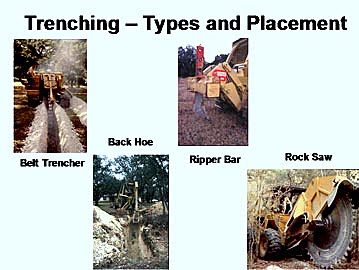
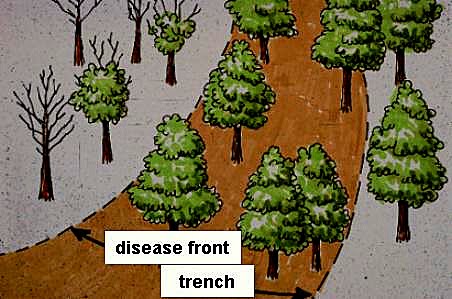
The reason for trenching is to break underground root connections between oak trees. Live oaks will pop up sprouts from their root system as a means of reproducing. Roots of our native oaks can reach 4-5 times the extent of the branches, so you can easily have long distances between trees that are still connected underground. In the TFS brochure they recommend trenches be cut 4′ deep at a minimum and possibly deeper in deeper soils. Most of the central Texas area has shallow soils, and where the soils are deeper (east) the forest composition is more diverse which means there are fewer oaks. In my experiences oak wilt is not a big problem in these areas. So, 4′ deep trench is probably a good recommendation, but there is really no way of knowing if you really did cut deep enough to break all the root connections. Where to place the trench is another important factor. There is a time lag from the time oak wilt infects a tree until the symptoms are apparent. For this reason you must go 100-150′ past the last tree showing symptoms to cut your trench. Unfortunately, doing this means some healthy looking trees will be inside the trench and destined to become infected.

For trees inside the trench that are still viable, and for high value trees where trenching is not possible, it is recommended that you inject them with fungicide. There are two different techniques for applying the fungicides and both are very similar: micro-injection and macro-injection (see picture for details). For the fungicide there are a few options: Tebuject by Mauget, Alamo by Syngenta, Systrex by TreeTech and a generic propiconizole from QualiPro. I can’t image that any one of these fungicides does any better job than the other, and the US Forest Service published some research in ’95 that showed there was no noticeable difference in efficacy between injection techniques. The same report also showed soil drench applications to be effective, but there are no products labeled for soil drench. And, I personally believe it to be a bad idea to completely drench any soil in fungicide.
Before you dive into any treatment I need to give you one very important warning: DO NOT ENGAGE IN ANY TREATMENT UNLESS YOU HAVE DONE A VERY GOOD JOB WITH THE DIAGNOSTIC PROCESS! You should definitely read my article on diagnosing oak wilt.