
Oak Wilt Treatment in Austin
Oak Wilt Diagnosis
The first step before beginning oak wilt treatments is to establish a confident diagnosis. Identifying oak wilt presents challenges because foliar symptoms resemble many other tree disorders. The most critical diagnostic indicator involves recognizing a pattern of disease spread across the site.
When disease progression isn’t immediately apparent, we recommend a monitoring program involving photographic documentation taken 3-4 times yearly. Many tree disorders can kill oaks, and oak wilt is not the primary killer we encounter, despite being widely known.
Oak Wilt Treatments
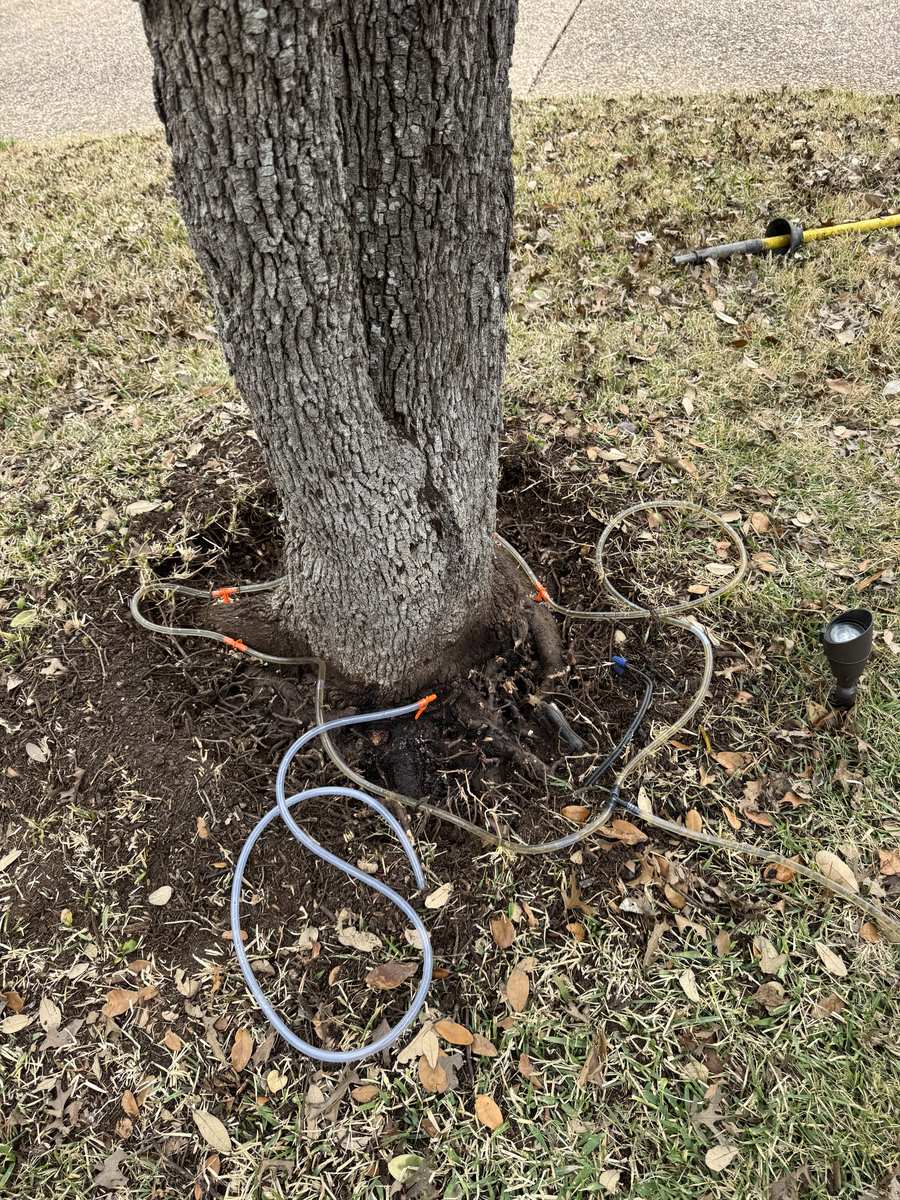
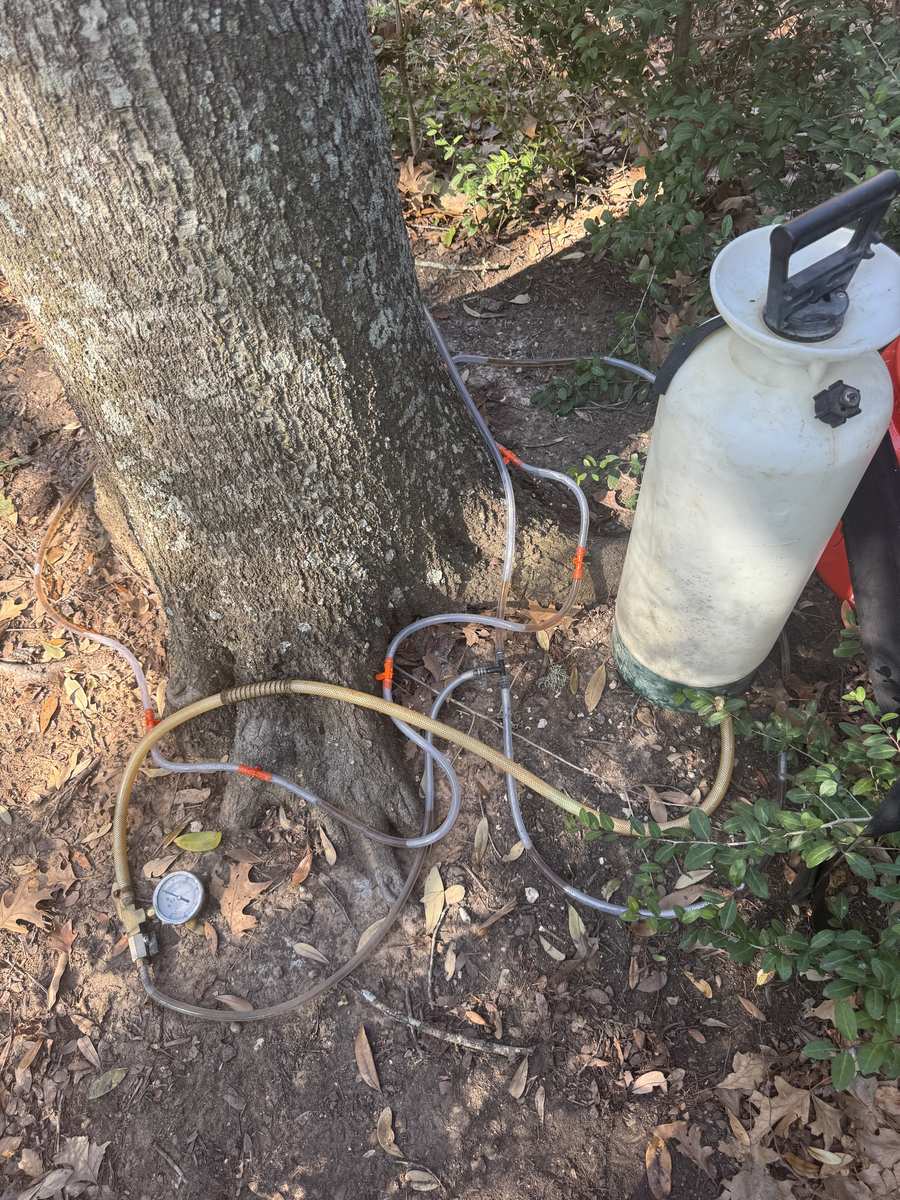
Treatment involves fungicide trunk injections using two methods: macro-injection (larger holes, greater water volume) or micro-injection (smaller holes, reduced water volume). Both techniques employ identical fungicide amounts, though macro-injection typically requires more labor. Either approach proves effective depending on specific circumstances.
Follow Up Inspections
A dedicated arborist manages follow-up care for each treated tree. Because tree metabolism processes the fungicide over time, treatments require reapplication every 12-18 months. Regular monitoring determines optimal retreatment timing. The program includes fertilization to prevent secondary tree disorders and provides comprehensive tree health management.
Frequently Asked Questions About Oak Wilt
What is oak wilt and which trees does it affect?
Oak wilt is a lethal fungal disease caused by Ceratocystis fagacearum that affects all oak species. In Central Texas, red oaks (including Shumard oak and Texas red oak) are most vulnerable and typically die within weeks of infection. Live oaks decline more slowly but can spread the disease through interconnected root systems to neighboring live oaks, creating expanding pockets of dead and dying trees across neighborhoods.
How does oak wilt spread?
Oak wilt spreads in two ways. Overland transmission occurs when sap-feeding beetles carry fungal spores from infected red oak mats to fresh wounds on healthy trees — this is why pruning oaks between February and June is discouraged. Underground transmission happens through grafted root systems, primarily among live oaks, where the fungus travels from tree to tree through shared root connections. Trench barriers can interrupt underground spread in some situations.
Can oak wilt be cured?
There is no cure for oak wilt, but fungicide trunk injections can suppress the disease and extend the life of infected live oaks significantly. Treatment works best when applied early, before the tree has lost more than 20 to 30 percent of its canopy. Red oaks generally cannot be saved once symptomatic, but treating nearby live oaks proactively can prevent the disease from spreading to them through root connections.
How do I know if my oak tree has oak wilt?
Symptoms in live oaks include veinal necrosis — a pattern of yellowing and browning along the leaf veins — followed by progressive leaf drop. However, many other conditions produce similar symptoms, including drought stress, bacterial leaf scorch, and nutrient deficiency. The most reliable diagnostic indicator is a pattern of decline spreading from tree to tree across a property or neighborhood. Our arborists can evaluate your trees and recommend monitoring or laboratory testing if the diagnosis is uncertain.
How much does oak wilt treatment cost?
Treatment cost depends on the size of the tree (trunk diameter determines the volume of fungicide required) and the number of trees being treated. Proactive treatment of healthy trees near an infected area is often more cost-effective than waiting for symptoms to appear. Customers enrolled in our Tree Care program for two or more years receive complimentary oak wilt treatments. Contact us at (512) 996-9100 for an assessment and quote.
When should I avoid pruning my oak trees?
Avoid pruning oaks from February through June, when sap-feeding beetles are most active and the risk of overland oak wilt transmission is highest. If emergency pruning is necessary during this period — such as storm damage — seal all wounds immediately with pruning paint or latex paint. Outside of this window, pruning oaks is safe and does not require wound treatment.
Related Services
- Tree Care & Health Management — ongoing health programs that include oak wilt monitoring and treatment for enrolled customers
- Tree Removal — safe removal of trees that cannot be saved, including full permitting assistance
- Arborist Consulting — certified arborist assessments for oak wilt diagnosis, risk evaluation, and treatment planning
- All Services
Get an Oak Wilt Assessment
If you suspect oak wilt on your property, early diagnosis and treatment are critical. Our Certified Arborists evaluate your trees, identify the disease pattern, and recommend the appropriate oak wilt treatment plan for your Austin property.
Call us today: (512) 996-9100