
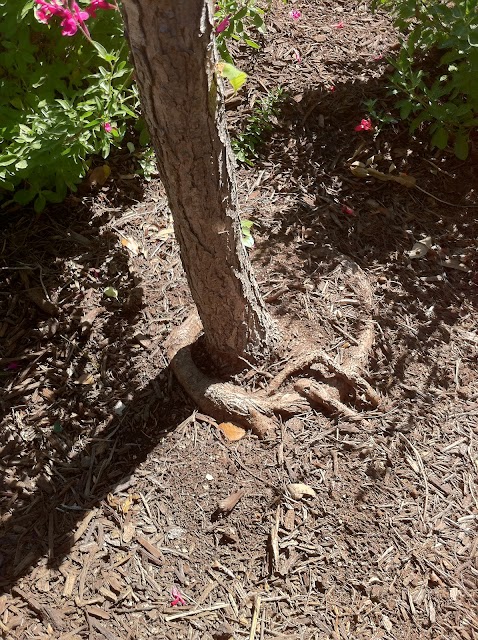
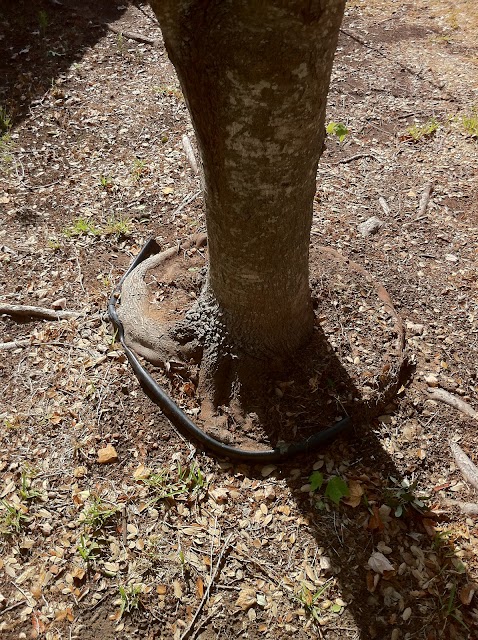
 Most planted trees in the Austin area are container grown trees. Most container grown trees develop girdling roots. If you’ve planted a tree, there is a good chance this is going to be an issue for your tree. Girdling roots are a serious problem. The end result is the tree literally choking itself. Tree death is the typical result from severely girdling roots. Even if your tree is lucky enough to survive, overall health and vigor will be poor. Behind construction and weed-n-feed damage, this is probably the third most prevalent and serious tree issue I run into out in the field (especially for transplanted trees). The picture to the left shows a typical looking girdling root. Keep in mind these aren’t always visible from surface level. Sometimes you have to dig down to find them.
What is a Girdling Root?
Girdling roots develop from trees living their first number of years in a container. The confined nature of a container forces roots to grow around in a circle instead of outward. As the tree grows, the girdling roots do not move further away; they only grow in diameter becoming a more substantial root. As the tree trunk grows in diameter, there comes a point where the root is choking or girdling the trunk.
[pe2-gallery class=”aligncenter” style=”margin:4px;” ]

 [/pe2-gallery]
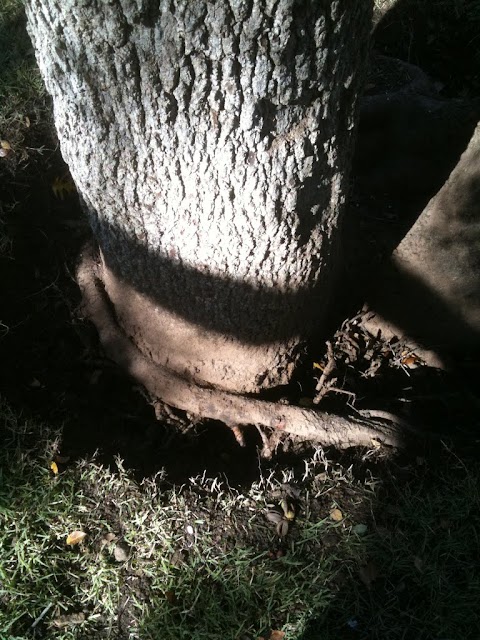
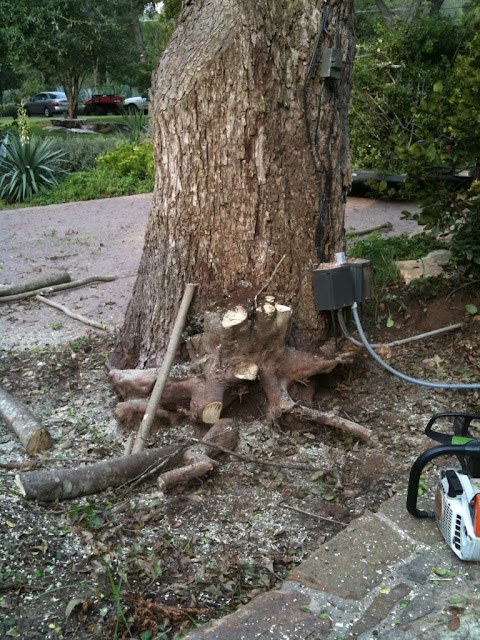
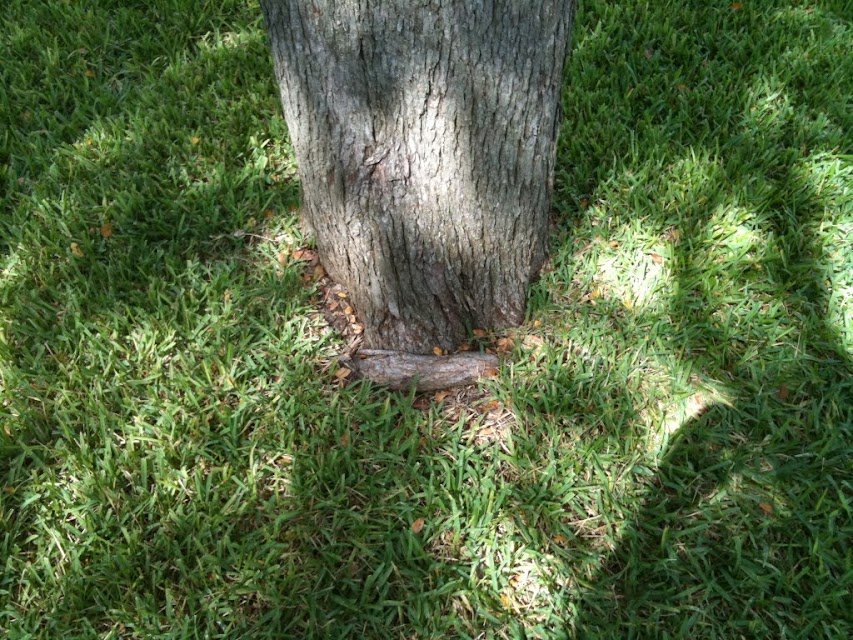
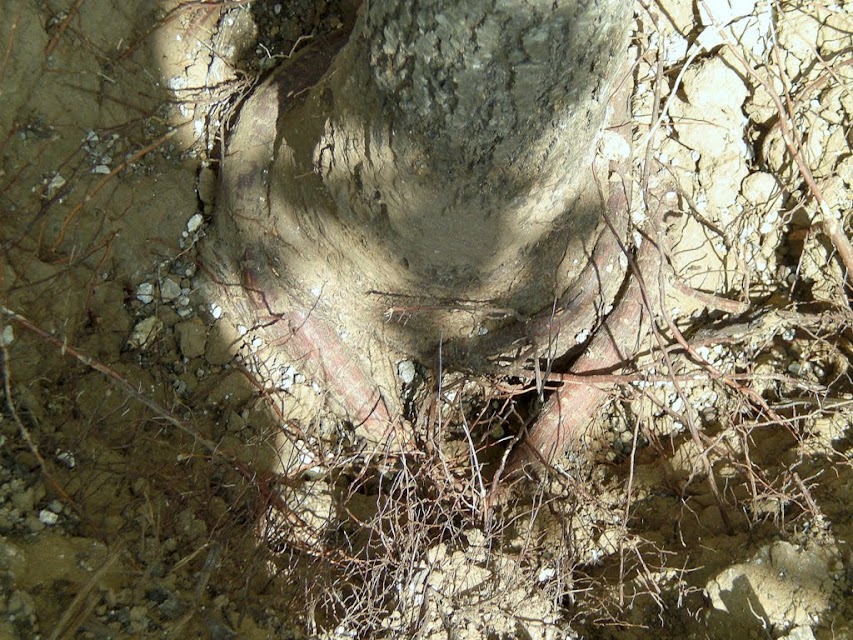
These pictures show several different scenarios where I have found girdling roots in trees. As you can see; they can look different in varying scenarios.
The only thing you can do for a girdling root is prune it out. Sometimes this means pruning a very large root and risks the tree dying. But, if you leave the root, the tree will definitely die prematurely. Pruning gives the tree a chance.
How to Fix Girdling Roots
[pe2-gallery class=”alignleft” style=”margin:4px;” ]

 [/pe2-gallery]
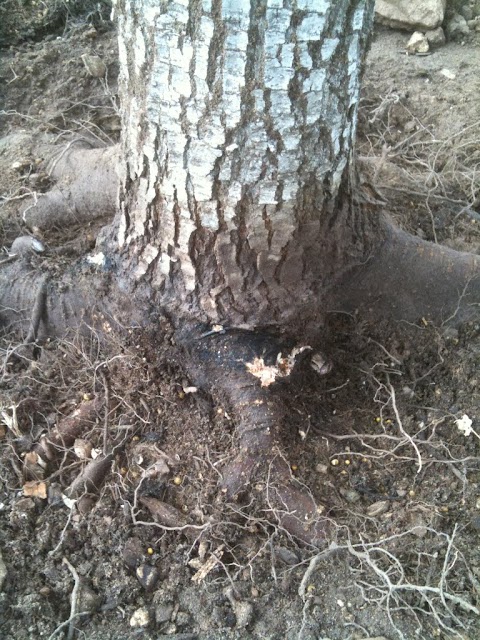
These two pictures to the left show a before and after of a tree where we removed some small girdling roots. The only thing you can do for a girdling root is prune it out. Sometimes this means pruning a very large root and risks the tree dying. But, if you leave the root, the tree will definitely die prematurely. Pruning gives the tree a chance. You’d be surprised how much root pruning a tree can tolerate. It has been my experience that many people think that pruning the smallest root means sure death of the tree. The reality is that trees can tolerate root pruning much in the same way they tolerate branch pruning. We routinely prune up to 4″ diameter roots right at the trunk of trees with little or no signs of stress in the tree. The roots we’ve pruned in these before and after photos will result in nearly zero stress to the tree; without pruning them away the tree would have had major structural defects in 5-10 years and potentially some major canopy dieback. I recommend that any transplanted tree be inspected for girdling roots about 5 years after it is planted. This amount of time allows the tree’s roots to become established and healthy enough to tolerate any necessary pruning. An air spade is the best tool for such exploratory excavation around the trees root crown.
Planting Trees
One of the fundamental steps in tree planting we call “tickling the root ball”. This is the process of tearing up the roots around the edge of the ball. This does two things. It “reduces” girdling roots and stimulates root growth. It is important to understand that tickling the root ball does not eliminate the possibility of girdling roots. You should still plan to excavate the root flares of your new tree a few years after planting to inspect for and prune away any girdling roots.