
Live Oaks are semi-evergreen; so, why am I writing about fall color on a live oak? Sometimes live oaks will produce fall color. But, usually not in the fall. When it happens it’s in the winter. I was somewhere between Hamilton Pool and Johnson City driving between jobs when I ran across these shining examples.
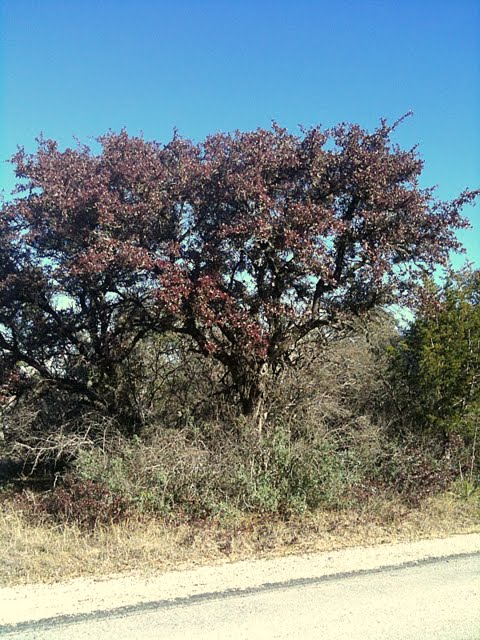
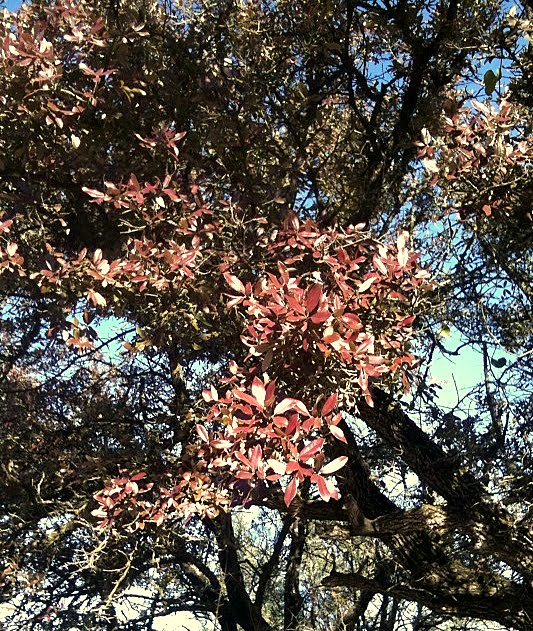
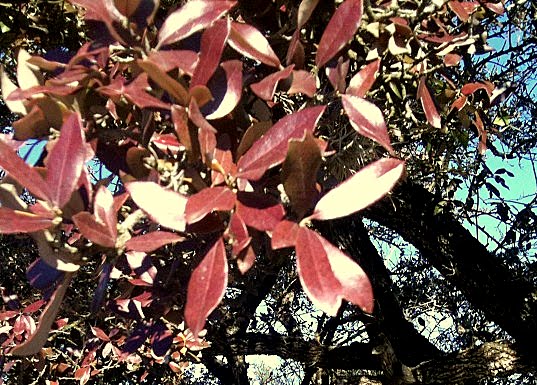
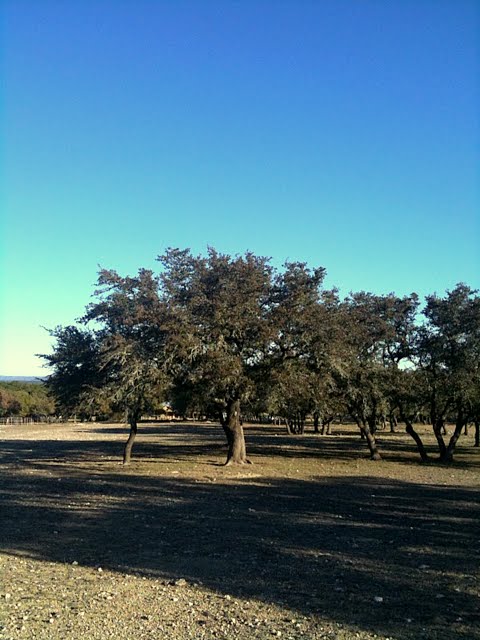
In botanical terms, this change is called senescence. The word senescence is derived from the Latin word senex, meaning “old man” or “old age” or “advanced in age”. For a leaf, old age is one year. This is the process by which the tree’s foliage breaks down before the leaves are shed. The norm for live oaks is to hold its foliage in a green, healthy state all through the winter until the new foliage in the spring pushes the old leaves off. It’s pretty common for live oak foliage to turn an off color green and get some orange spots during the late season. But, the red color in the pictures above is pretty rare for a live oak. Beautiful in my opinion, and definitely not a problem for the tree. I’ve never seen a tree go bad the years after they experience this phenomenon of senescence. The grand ‘ole oaks will leaf out as normal next spring.