
Construction Site Tree Services in Austin TX
Construction projects in Austin don’t just have to work around trees — they have to comply with one of the strictest municipal tree ordinances in Texas. Austin Tree Experts provides the arborist services that developers, engineers, architects, and contractors need to keep projects moving through permitting and protect trees that the City requires you to preserve.
Why Construction Projects Need an Arborist
In the City of Austin, any tree 19 inches or greater in diameter (measured at 4.5 feet above grade) is classified as a protected tree. Heritage trees — those 24 inches and larger, or 8 inches and larger for certain species — carry additional protections that can halt a project if not addressed early in the planning phase. Removing or damaging a protected tree without a permit triggers fines, mandatory mitigation planting, and potential project delays.
The practical reality is that tree compliance isn’t optional and it isn’t something you figure out during construction. It starts at the site plan stage. Having a certified arborist involved early prevents costly surprises — rejected permits, redesigned footprints, or stop-work orders from the City’s development review team.
Construction Site Arborist Services
We work with project teams from pre-development through certificate of occupancy. Here is what we provide:
Tree Surveys and Inventories
A tree survey is typically the first step for any development project with existing trees. We inventory every tree on the parcel — species, diameter, condition, and location — in the format the City of Austin requires for site plan submissions. Our surveys identify which trees are protected, which qualify as heritage, and which can be removed with a standard permit. This data drives your site design decisions before you commit to a layout.
Tree Preservation Plans
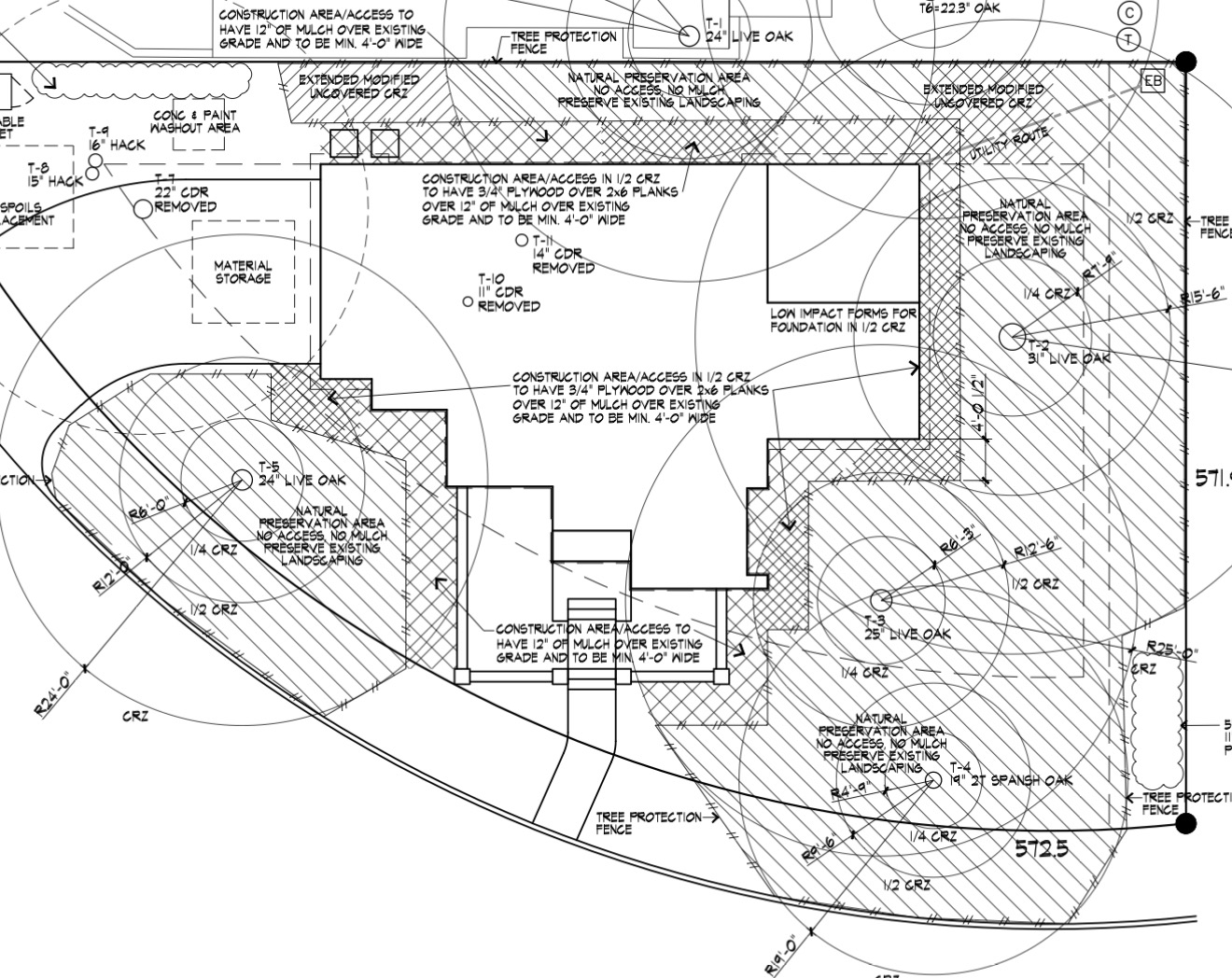
The City requires a tree preservation plan for most development projects that affect protected trees. We prepare plans that specify critical root zones, protection measures during construction, and mitigation commitments. Our plans are formatted to meet City of Austin Development Services Department standards and are submitted as part of your site plan package.
Construction Impact Assessments
When a proposed building footprint, utility trench, or grade change encroaches on a protected tree’s critical root zone, the City wants to know what the impact will be and whether the tree can survive it. We assess root zone conflicts, canopy interference, and grade changes, then provide a written professional opinion on tree viability — the documentation the City needs to approve your plan.
Canopy Impact Assessments
For projects triggering canopy coverage requirements, we calculate existing canopy, project post-construction canopy, and determine mitigation obligations. Austin’s code ties canopy preservation to impervious cover and environmental review — getting these calculations right the first time prevents revision cycles with the City.
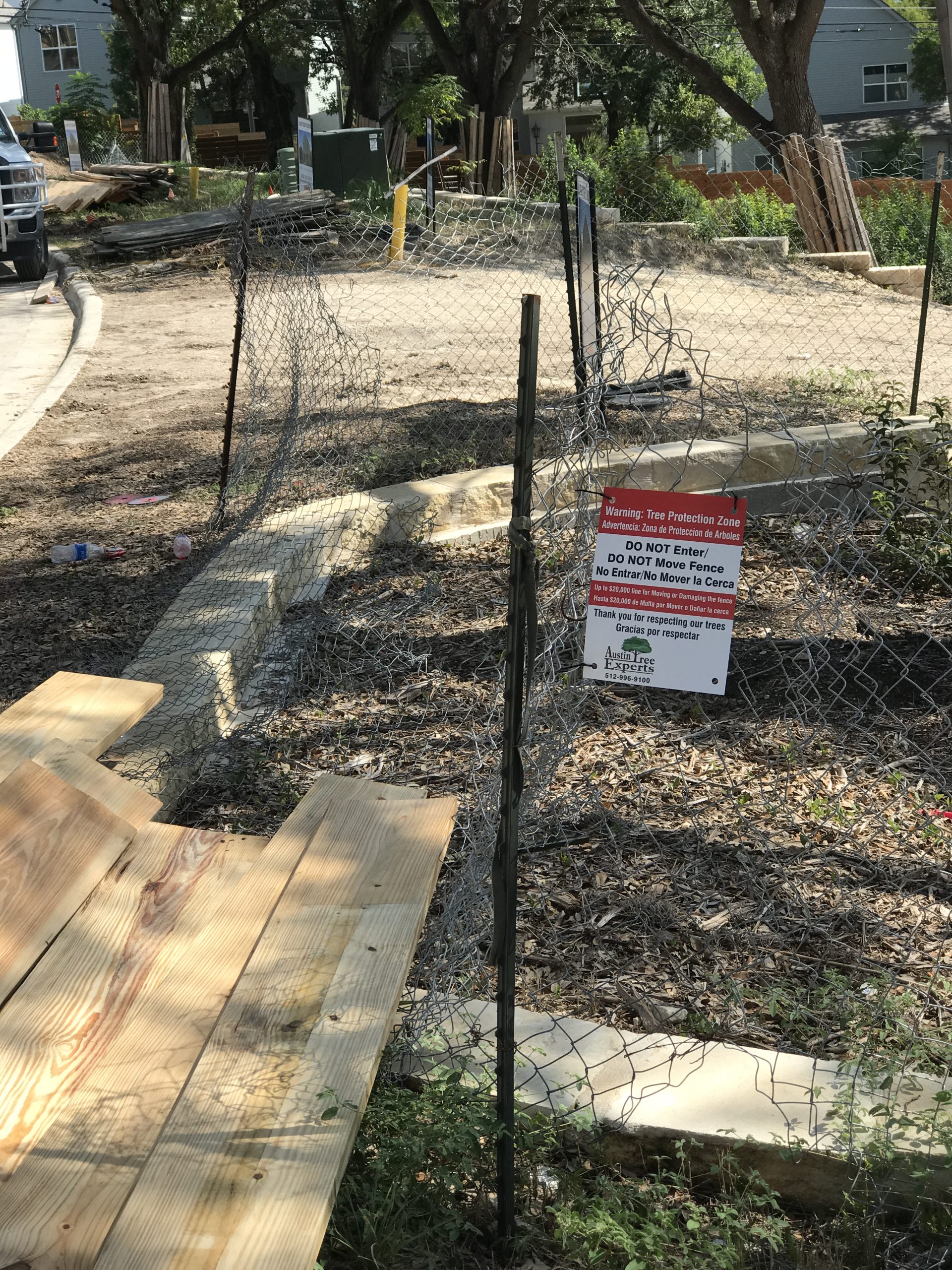
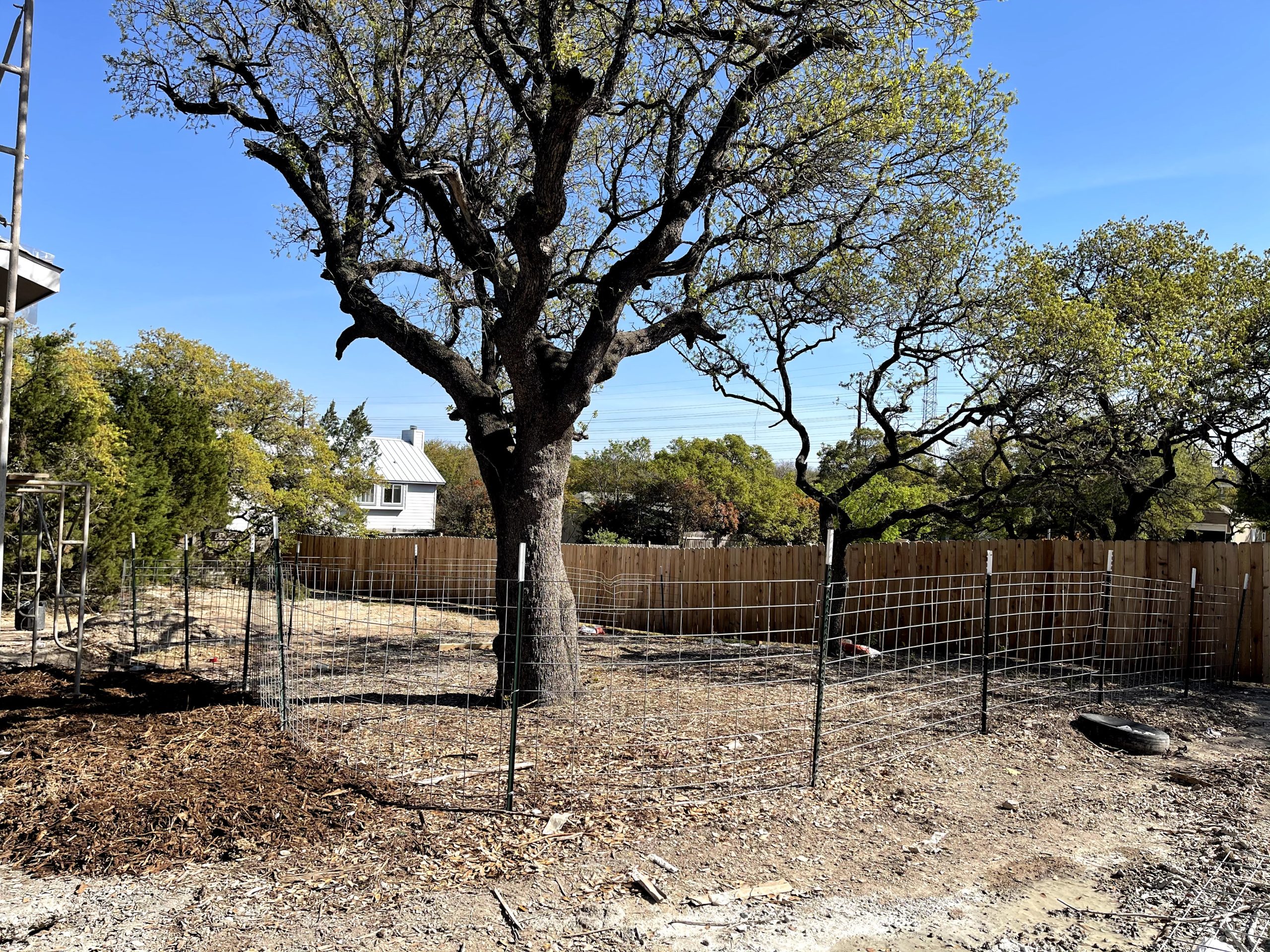
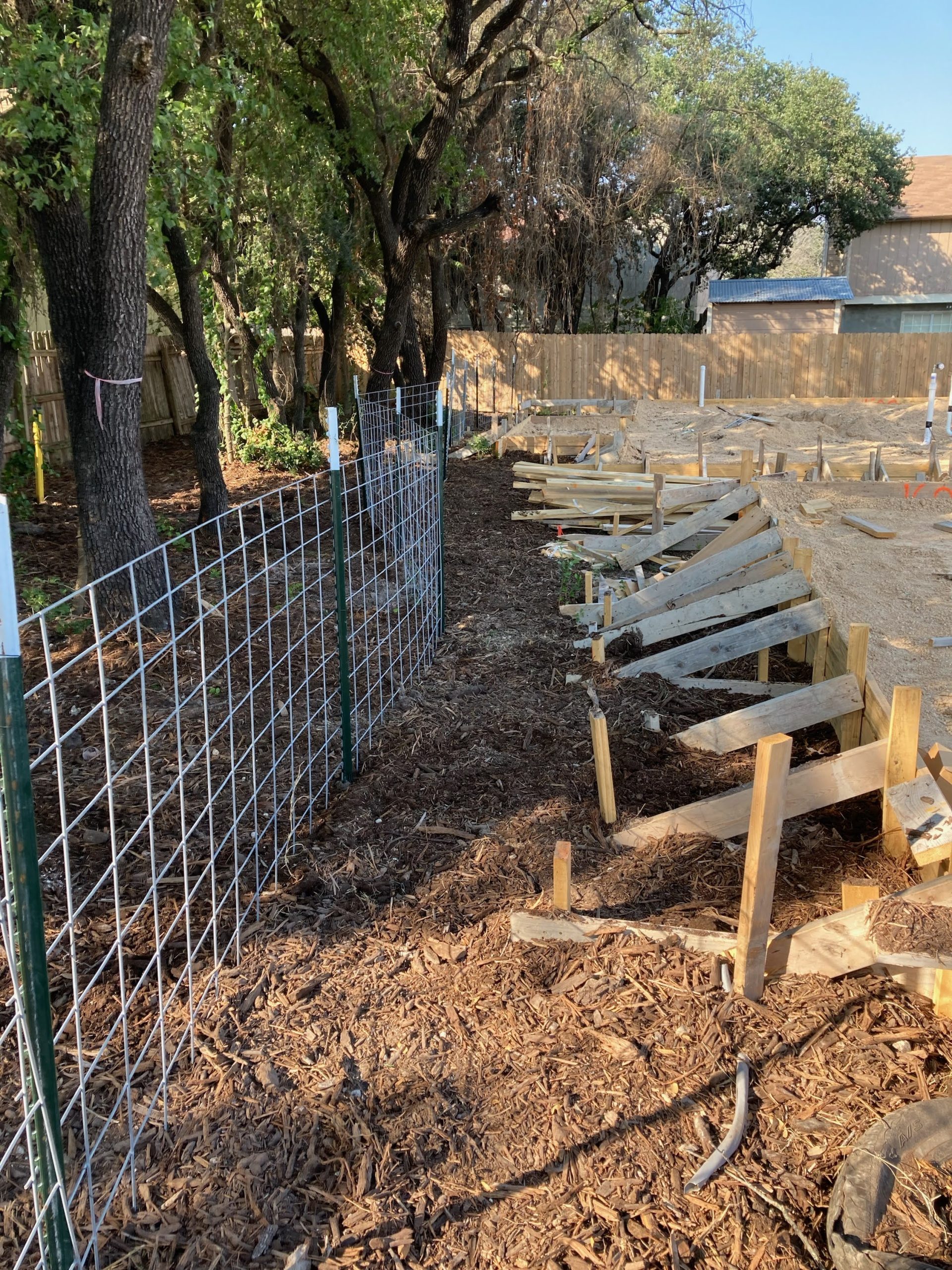
Tree Protection Fencing and Monitoring
Protection fencing is required around preserved trees during construction. We install fencing at the correct distances (based on critical root zone calculations, not guesswork), provide signage that meets code requirements, and offer periodic monitoring to ensure fencing stays in place and construction activity doesn’t encroach. When the City inspector visits your site, the tree protection will be exactly where it should be.
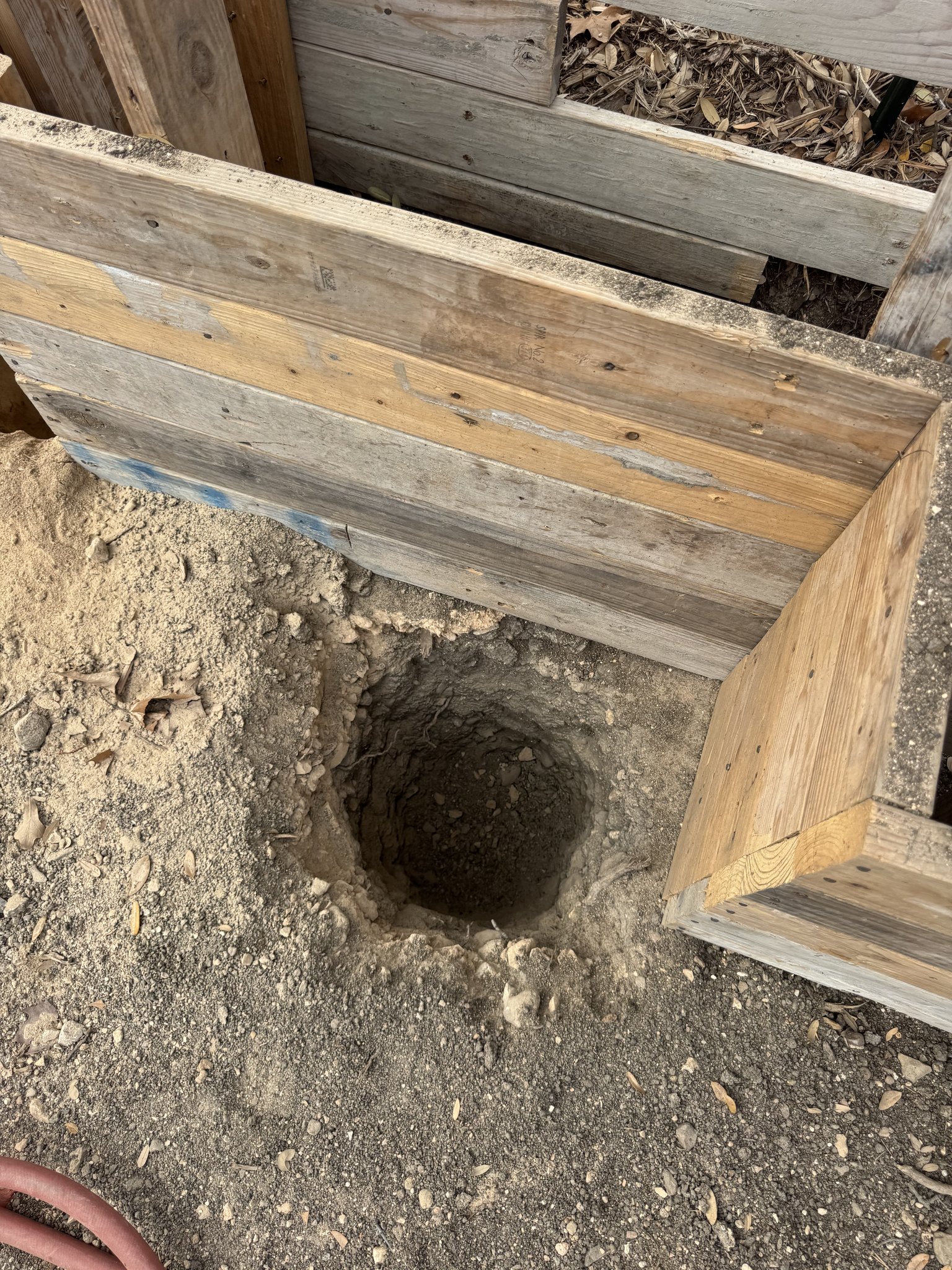
Root Zone Work with Air-Spade
When utility lines, foundations, or grading must occur within a tree’s critical root zone, conventional excavation with a backhoe will sever roots and likely kill the tree — and violate your preservation plan. We own Air-Spade equipment that excavates soil using compressed air, exposing roots without damaging them. This allows plumbers, electricians, and foundation crews to route their work around roots rather than through them. It is the method the City of Austin expects when construction occurs within a critical root zone.
Permit Handling
We manage the full permit process for tree removal and construction-related tree work within Austin and surrounding jurisdictions. This includes the application, required documentation, arborist letters, mitigation calculations, and follow-up with the City. We know what the reviewers expect because we submit to them regularly — our applications don’t get sent back for corrections.
Austin’s Tree Ordinance — What Developers Need to Know
The City of Austin tree ordinance applies differently depending on where your project sits:
- Inside city limits — full tree ordinance applies. Protected trees (19″+) require removal permits. Heritage trees (24″+ for most species, 8″+ for Texas Madrone, Bigtooth Maple, and others on the heritage species list) have a separate, more stringent review process with higher mitigation requirements.
- Extraterritorial Jurisdiction (ETJ) — reduced protections apply, but heritage trees are still protected. The rules are different from inside city limits, and many contractors assume no rules apply in the ETJ. That assumption leads to fines.
- Surrounding jurisdictions — Cedar Park, Round Rock, Pflugerville, and other municipalities have their own ordinances. Not sure which jurisdiction covers your site? Use our free Jurisdiction Map tool.
Beyond the tree ordinance itself, construction projects interact with the Environmental Review process, the Waterway Setback Ordinance, and Save Our Springs (SOS) regulations in the Barton Springs Zone. Trees in these sensitive areas carry additional protections that affect what you can build and where. We navigate all of these overlapping requirements.
Why Construction Teams Choose Austin Tree Experts
- ISA Certified Arborists — our certifications meet the City of Austin’s requirements for arborist reports and tree preservation plans. Our reports carry professional credibility with development reviewers.
- Accepted by City of Austin Development Services — we submit tree surveys, preservation plans, and permit applications to the City regularly. Our documentation is formatted to their standards and doesn’t get rejected for technicalities.
- Air-Spade equipped — we own the equipment for non-invasive root zone excavation. You don’t need to hire a separate subcontractor for root work within critical root zones.
- Consulting to execution — most consulting arborists write a report and leave. We can also perform the tree work — removals, pruning, protection fencing, root zone excavation, and mitigation planting. One company from site assessment through project completion eliminates coordination between multiple vendors.
- Operating since 2003 — we’ve worked on construction sites across Austin for over two decades. We understand how construction timelines work and we don’t hold up your schedule.
Construction Site Tree Protection — Project Gallery
Frequently Asked Questions
When in the development process should I bring in an arborist?
As early as possible — ideally before your site plan is finalized. A tree survey identifies protected and heritage trees that will constrain your building footprint, utility routing, and grading plan. Discovering a heritage live oak in the middle of your proposed foundation after the site plan is submitted means costly revisions. Bringing us in during the conceptual design phase lets your architect or engineer design around constraints rather than redesigning after the City rejects the first submission.
Can I just remove the trees and pay the fine?
This is more costly than most people realize. Unauthorized removal of a protected tree in Austin triggers fines of up to $1,000 per caliper inch of the tree’s diameter, mandatory mitigation planting at replacement ratios that can exceed 3:1, and potential stop-work orders on your project. For a 30-inch heritage oak, the fine alone can exceed $30,000 before mitigation costs. The permit process, while it requires documentation and time, is far less expensive than the alternative.
What is a critical root zone and why does it matter for construction?
The critical root zone (CRZ) is the area around a tree where the majority of absorbing roots are located — generally calculated as one foot of radius per inch of trunk diameter. Any excavation, grading, soil compaction, or material storage within the CRZ can damage roots enough to kill the tree. The City of Austin requires that construction activity stay outside the CRZ of preserved trees, with protection fencing to enforce that boundary. When construction must occur within the CRZ, Air-Spade excavation and arborist supervision are required.
Do you work with civil engineers and architects directly?
Yes. We regularly coordinate with civil engineering firms, architects, landscape architects, and general contractors on development projects. We can provide tree survey data in formats compatible with CAD and GIS software, attend pre-construction meetings, and coordinate directly with your design team to integrate tree preservation into the site plan. We understand construction drawings and schedules — you won’t need to translate between arborist language and engineering language.
How long does the tree permit process take in Austin?
Standard tree removal permits are typically processed within 2-4 weeks when the application is complete and properly documented. Heritage tree removal permits go through a more extensive review and may require 4-8 weeks or longer, depending on the specifics of the case and whether a variance is needed. We prepare applications that are complete on the first submission, which avoids the revision cycles that add weeks to the timeline. If your project is on a tight schedule, bring us in early so the tree permitting runs in parallel with your other approvals rather than holding them up.
Related Services
Construction site tree work connects to several of our other capabilities:
- Arborist Consulting — tree risk assessments, expert witness testimony, and appraisals for construction-related disputes
- Air-Spade Services — non-invasive root excavation for utility trenching, foundation work, and soil decompaction within critical root zones
- Tree Removal — permitted removal of trees that cannot be preserved, including crane work for large specimens in tight spaces
- Tree Planting — mitigation planting to satisfy City requirements after permitted removals
- Tree Pruning — clearance pruning for construction equipment access and structural pruning of preserved trees
- All Services
Get Your Construction Project Started Right
Whether you’re in pre-development planning or already have a site plan under review, we can step in at any point. Call (512) 996-9100 to speak directly with a certified arborist about your project’s tree requirements. We’ll give you a clear scope of work and timeline so you know exactly what’s needed to keep your project on track with the City of Austin.