
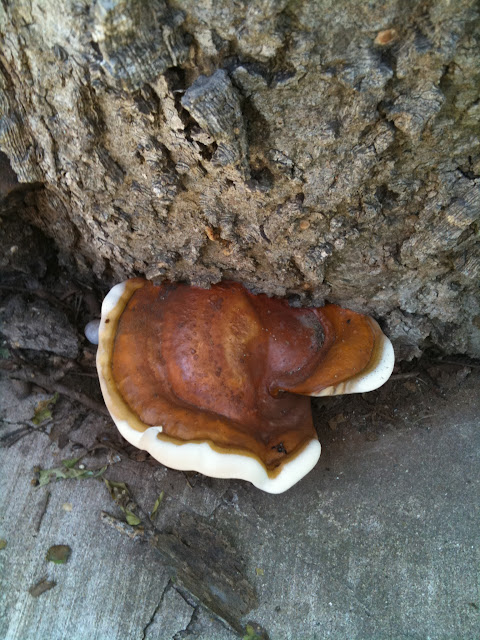
 Ganoderma applanatum is called the artists conk because it has a very good surface for painting and carving. This is the end of the list of good qualities for this fungi. For trees, this disease is devastating.
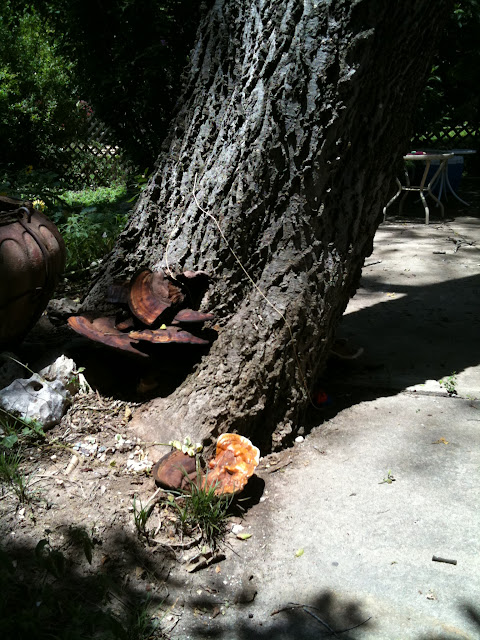 This species of Ganoderma is one of the most aggressive wood decay fungi. It can destroy the structural integrity of a tree in one season, leaving the tree a hazard waiting to fall at any moment. For some trees, Ganoderma is mostly just a structural integrity problems. It makes the wood too soft to hold up. For some trees, that are only fair or poor at compartmentalizing decay, the disease can break into and kill live tissue rather that just rotting the dead inner column of wood. Red oaks and hackberries are prone to this kind of attack from Ganoderma applanatum. I’ve seen it actually attack the health and vigor on these varieties of trees.
If you see these mushrooms on your tree you are in for some trouble most of the time. 90% of the time the tree will need to be removed. Especially if it is near a house or any other target the tree might damage if it falls.
There is no treatment for Ganoderma applanatum. The best way to avoid it is to make proper pruning cuts and avoid wounding the trunk and root system of your trees. Good tree protection during construction activity is also important for avoiding this, including many other, decay fungi. Ganoderma 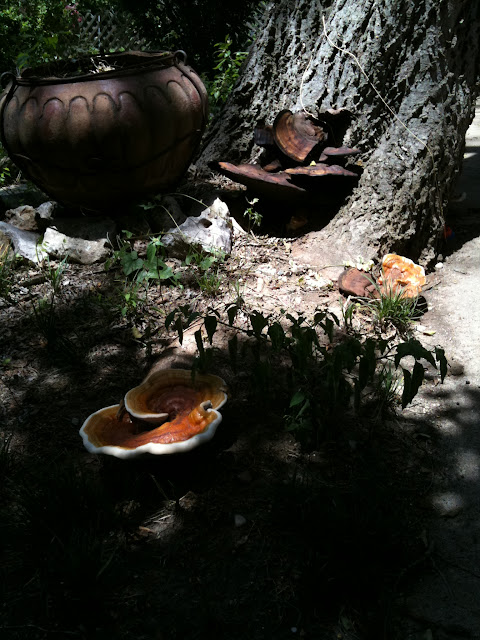 exists in the soil everywhere. If you have severe wounds that a tree has difficulty healing and the weather conditions are right, your trees are prone to this fungi. Ganoderma applanatum is usually more active following rain and during wet seasons. Maintaining a good irrigation, fertilization and pruning program will keep your trees vigorous and less prone to this and other decay fungi.