
It’s funny to me what gets “diagnosed” as lightning strikes. It seems to me the average homeowner thinks the only two afflictions known to trees are oak wilt and lightning. Hopefully, this simple post 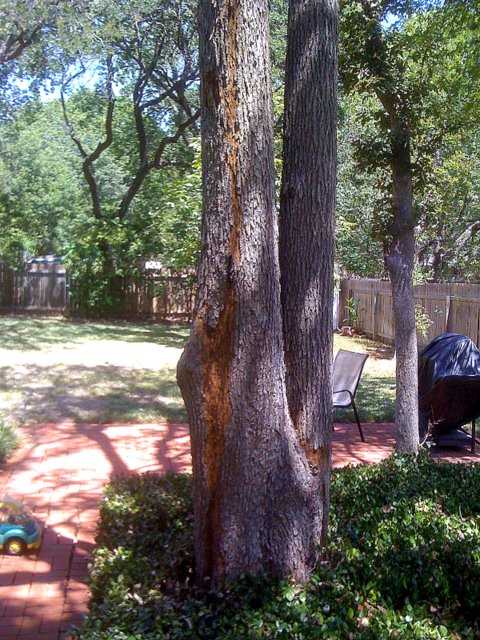 will shed some light for many of you wanting to know if your tree was struck by lightning, and if so, what you should do about it.
The main thing you need to look for is a narrow wound that stretches the length of the trunk from the upper canopy to the ground. Typically, lightning doesn’t strike the tree half way down the trunk. It hits somewhere out near the tip of the canopy. Then, the charge travels down the trunk of the tree into the ground. In this picture, the strike barely blew-off the outer layer of bark. Normally, the wound is gaping and bark can found as far as 50 feet from the trunk. The cedar elm in this picture made out easy due to some underground sprinkler wires. There was an electric wire for the sprinkler that was draped across one of the buttress roots near the trunk. The charge hopped onto this wire and ran straight to the sprinkler’s controller box in the garage. From there it went to the plug for the system, then to every electrical outlet in the house. According to the homeowner it burnt every electronics component in the house to a black crisp! Thank goodness for homeowner’s insurance (and that no one was hurt).
The main thing you need to look for is a narrow wound that stretches the length of the trunk from the upper canopy to the ground.
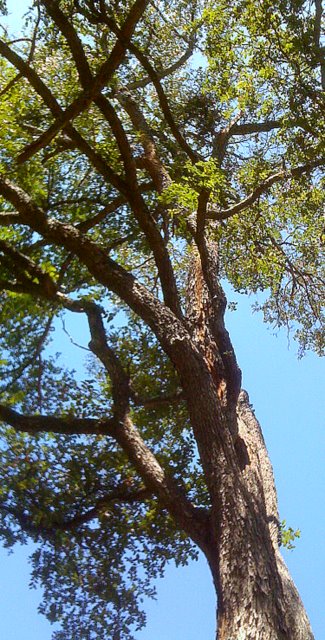
So what should you do if your tree is struck by lightning? If possible, get an arborist out there to find out the extent of damage to the tree. Remove any limbs damaged to the point that they have lost their structural integrity. And, carefully remove any shards and splintering wood; be careful not to make the wound larger than it already is. Only paint the wound if it is an oak susceptible to oak wilt; do not paint the wound otherwise. Wound dressings are bad for trees. Large trunk wounds take trees a very long time to repair. It could be 20 years before callous tissue covers over the wound, and the tree will be vulnerable to insect and disease infections. Borers are a very common and very damaging insect that are attracted to this type of injury. It would be very good to put the tree on a fertilizer regimen and regular inspection program to help minimize the trees injuries and speed up the healing process.