
There are two basic categories you need to address when it comes to tree selection. What is the best tree for your planting site and how to pick a quality specimen. You need to get these two things right or all you labor will be for nothing.
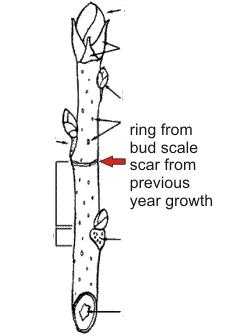
Lets start with selection of a quality tree. Let’s start by looking at the leaves. The deeper green the color the better the leaf. Unfortunately, this technique is only completely reliable in the spring. If you are looking in the summer or fall this will be deceiving because the trees may be going through normal leaf drop or heat stress. You shouldn’t plant in the summer anyway, so you shouldn’t be looking then. If you are trying to find a tree in the fall, look at the bud scale scar. More distance between these scars indicates more growth, which can be an indication of healthier trees (or better fertilizer). This only works when you are comparing trees of the same species.
The next thing to look for are trunk wounds. Don’t buy anything with injuries on the trunk.

Growth form is another important factor if you are looking for a large growing shade tree. You want a tree with a single trunk all the way to the top. Think Christmas tree. Often, there will be a biforcation (joint) in the lower part of the tree and you will have a “double leader.” This is basically two main trunks. These trees will have structural integrity problems in the future.
Picking the right kind of tree for the right place can be tricky. For this part I highly recommend consulting with your arborist. You need to be careful taking advice from the nursery. They don’t know where you live or what your site looks like. There are a few important topics to discuss with your arborist.
- Do you want a small ornamental tree or a large shade tree or something inbetween?
- Is the tree going to be pampered or thrown to the wolves? (auto-irrigation, fertilized regularly)
- What other landscape changes do you want to make around the tree’s planting site?
Follow these steps and you should wind up with the right kind of tree and a nice looking specimen.